
Most Beautiful Remote Greek islands
Some of the most beautiful Greek islands are also among the most remote. Their relative isolation has helped preserve dramatic landscapes, traditional settlements and a sense of tranquillity that can be harder to find in more accessible destinations. For travellers willing to venture further afield, these islands often reward the extra journey with unspoilt scenery, quieter beaches and an atmosphere that feels refreshingly disconnected from the pace of modern life.
| Island – Description |
|---|
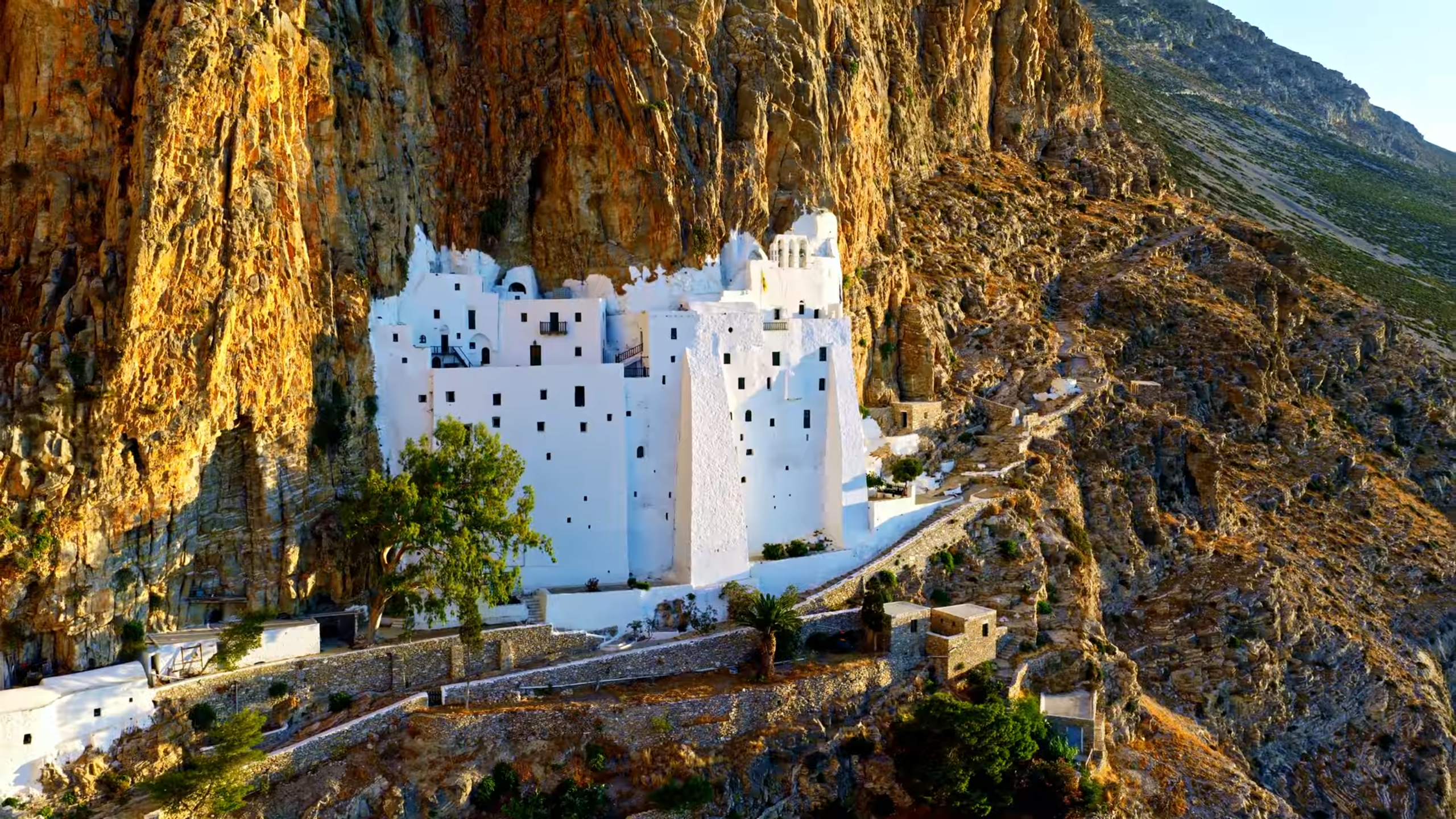
| Amorgos — Towering cliffs, mountain villages and deep-blue seas create some of the most dramatic scenery in Greece, while its position on the eastern edge of the Cyclades keeps it noticeably removed from mainstream island tourism. |
| Astypalaia — Stunning whitewashed architecture, a spectacular hilltop chora and beautiful coastlines are matched by a position between the Cyclades and Dodecanese that keeps it genuinely removed from mainstream tourism. |
| Kastellorizo — One of Greece’s most visually distinctive islands thanks to its colourful harbour and dramatic coastal setting, while its far-eastern location makes it one of the country’s most remote inhabited islands. |
| Patmos — Elegant architecture, beautiful bays and a dramatic spiritual landscape create exceptional beauty, while its northeastern Dodecanese location keeps it far from Greece’s major tourism hubs. |
| Symi — Arguably Greece’s most beautiful harbour town is surrounded by dramatic coastal scenery, while its southeastern Dodecanese location gives it a genuine sense of remoteness. |
| Anafi — Stark volcanic landscapes, dramatic ridges and a powerful sense of wilderness combine with limited connectivity and a peripheral Cycladic position. |
| Ikaria — Mountain scenery, traditional villages and a rugged natural landscape create substantial beauty, while its eastern Aegean position leaves it noticeably detached from mainstream island routes. |
| Leipsoi (Lipsi) — Crystal-clear turquoise bays and attractive island scenery are enhanced by a remote northeastern Dodecanese location. |
| Nisyros — One of Greece’s most unique islands thanks to its volcanic caldera and striking landscapes, while its position on the edge of the Dodecanese contributes to its remoteness. |
| Samothrace — Massive mountains, waterfalls, forests and wild landscapes create scenery unlike almost anywhere else in Greece, while its northern Aegean location keeps it geographically detached. |
| Tilos — Attractive coastlines, rugged landscapes and a strong sense of authenticity are strengthened by its remote southeastern Aegean position. |
A quite slice of heaven
The most beautiful remote Greek islands are generally best suited to travellers who want exceptional natural scenery combined with a genuine sense of escape from the crowds. They tend to appeal to adventurous travellers, photographers, hikers, sailors, nature lovers, repeat visitors to Greece, and anyone who values solitude and authenticity as much as beautiful beaches and landscapes. People searching for beautiful remote islands are often looking for dramatic coastlines, crystal-clear water, traditional villages, untouched scenery, and an atmosphere that feels far removed from mass tourism. These destinations are particularly attractive to those who enjoy exploring lesser-known places, discovering hidden beaches, spending time outdoors, and experiencing a slower pace of life where nature remains the dominant feature. They are generally less suited to travellers seeking luxury resorts, extensive nightlife, frequent transport connections, or a packed schedule of organised attractions. For many visitors, the appeal lies in finding places that combine some of the most spectacular scenery in Greece with the feeling of having escaped to the edge of the Aegean or Ionian Sea, where beauty and remoteness exist in equal measure.
Back to Location
The Greek Island Directory is a project of passion where a love of Crete, Data Integrity and Directories converge to create something truly special for users: Learn More.
Last Updated on June 2, 2026 by admin