
Farmakonisi
Farmakonisi is a tiny Dodecanese island between Leros and the Turkish coast, only 3.9 square kilometres in area and just over four kilometres from end to end. Administratively part of Leros, it had only 21 permanent residents at the 2021 census, and there is little in the way of a conventional settlement: the island is mostly low, dry terrain with a small plateau in the south, scattered remains of an older farming community and the whitewashed church of Agios Georgios.
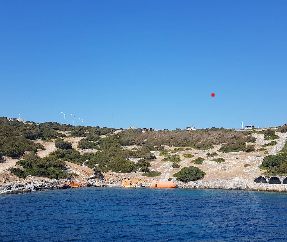
Its scale and isolation are really the defining features, rather than a particular resort beach or village atmosphere. Farmakonisi has been associated with medicinal herbs since antiquity — its ancient name, Pharmakousa, is thought to derive from them — while the island’s best-known historical story is the tradition that Julius Caesar was held here by pirates for 38 days; today, the ruins of a Roman temple and remnants of old agricultural life are about as close as it gets to organised sightseeing. It is an exceptionally quiet, exposed little outpost in the eastern Aegean, surrounded by open water and with the Turkish coast surprisingly close on the horizon.
A genuinely remote Dodecanese escape
Farmakonisi is a strong fit if you mean genuinely remote, quiet and stripped-back rather than simply less touristy. This tiny island in the southeastern Dodecanese has no permanent settlement in the conventional sense, very limited infrastructure and a landscape of low hills, scrub and small coves, with its main appeal being isolation, clear water, fishing and complete separation from the developed resort islands. The island is also historically interesting, with remains associated with its ancient occupation and a small chapel of Agios Georgios, but there is little conventional sightseeing compared with larger Greek islands. Its position between Leros and the Turkish coast is a major part of the experience: Farmakonisi feels like somewhere you go specifically to get away from developed island life rather than somewhere you visit for a packed itinerary.
Come prepared for almost nothing
The same isolation that makes Farmakonisi attractive is also its biggest limitation. There are no hotels, conventional tourist facilities, shops or restaurants on the island, and accommodation is extremely limited, so visitors generally need to arrive independently prepared with food, water and everything else they require. Access is by boat rather than air, with connections associated with nearby Leros and other Dodecanese islands, and services are considerably more limited than on even the smaller inhabited islands. Farmakonisi has also been used historically for seasonal fishing and military purposes, so it should not be confused with a conventional holiday island. This is therefore an island for someone actively seeking remoteness and simplicity; if you need reliable services, plentiful accommodation, regular transport or a choice of tavernas, it is one of the weakest possible fits.
Sources
- visitgreece.gr – Farmakonisi | Small Dodecanese island, location between Leros and the Turkish coast, historical remains, Agios Georgios chapel and undeveloped character
- Greek Travel Pages – Farmakonisi | Island geography, settlement and tourism information, limited infrastructure and access by boat
- Leros Municipality – Farmakonisi | Farmakonisi’s relationship with Leros, natural landscape, beaches and historical features
- Kathimerini – Farmakonisi | Historical significance, archaeological remains and the island’s isolated character
Back to all Greek islands
The Greek Island Directory is a project of passion where a love of Crete, Data Integrity and Directories converge to create something truly special for users: Learn More.
Last Updated on August 28, 2026 by admin