Gyali
Gyali is a tiny volcanic island lying between Nisyros and Kos in the southern Dodecanese, little more than a rocky outpost divided into two very different halves by a narrow isthmus. It has no permanent settlement and is almost entirely shaped by its unusual geology: the northern part is dominated by white pumice deposits, while the southern half is darker and more heavily vegetated, with the island’s highest point rising to around 180 metres.
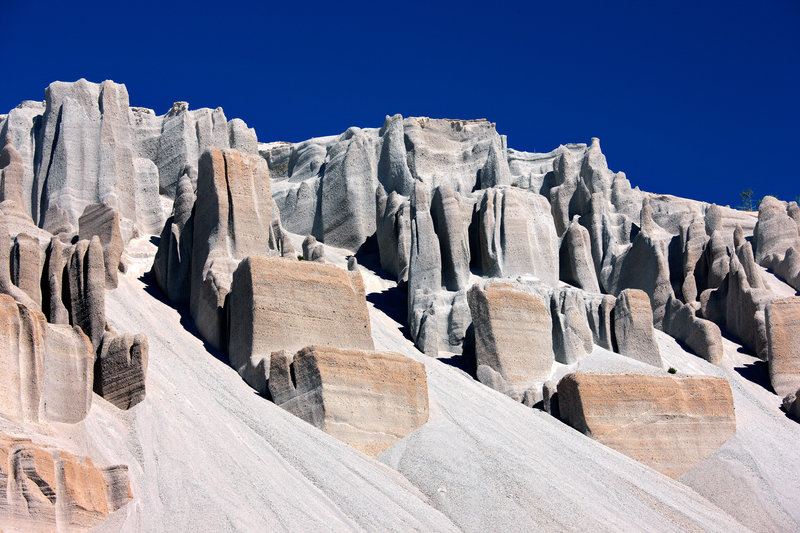
The contrast is striking from the sea, where brilliant white pumice cliffs and beaches make Gyali look almost bleached against the deep Aegean. Much of the island is occupied by an active pumice and perlite quarry, so this is not an untouched little beach island in the conventional sense; instead, its appeal lies in seeing an exceptionally unusual volcanic landscape up close, with a few small coves and beaches around the edges and the much larger volcanic mass of Nisyros visible nearby.
A volcanic curiosity rather than a holiday island
Gyali is a fascinating fit if you are looking for something genuinely unusual, geological and almost completely removed from conventional Greek island tourism. The tiny island lies between Nisyros and Kos and is effectively split into two contrasting volcanic landscapes: enormous pale pumice deposits on one side and dark obsidian and perlite formations on the other, joined by a narrow sandy isthmus. There are attractive coves with remarkably clear water, but the real draw is the strange landscape itself, where ancient volcanic geology, prehistoric obsidian working and a still-active industrial quarry all occupy the same tiny island. For someone interested in obscure islands, unusual landscapes and places that feel completely unlike the standard Greek holiday destination, Gyali is exceptionally distinctive.
There is almost no conventional island life here
Gyali needs to be approached as a specialist visit rather than somewhere you simply book a holiday. The island has no normal tourist settlement, hotels, public transport or regular visitor infrastructure, and its small resident population is primarily connected with the mining operation. Pumice extraction has been taking place since the 1950s and remains active, with private port and industrial areas occupying a significant part of the island. Boat visits from Nisyros are possible, including trips that stop for swimming, but access to the island is restricted to designated areas and visitors should not assume that the quarry landscape is freely accessible. This makes Gyali a poor fit if you want accommodation, tavernas, developed beaches or the freedom to explore an entire island independently. Its appeal is precisely that it is an industrial workplace and geological oddity with a few beautiful coastal areas, not a conventional tourist destination.
Sources
- nisyros.gr – Gyali | Official Municipality of Nisyros information on Gyali’s volcanic landscape, pumice and perlite mining, coves, boat access from Mandraki and lack of conventional tourist facilities
- visitnisyros.gr – Gyali Island | Volcanic geology, pumice deposits, obsidian, perlite and ongoing quarrying
- LAVA – Yali Pumice Quarry | Active open-cast pumice quarry, operation since the 1950s, production capacity and privately owned port facilities
- EAGME GeoTreasures – Islets of Gyali and surrounding area | Geological formation, volcanic history, pumice deposits, obsidian and archaeological evidence
- Frontiers in Marine Science – Shallow Sea Gas Manifestations in the Aegean Sea | Gyali’s volcanic geology, location between Kos and Nisyros and limited permanent habitation
- This Is Your Greece – Gyali | Limited public access, active mining, absence of standard visitor ferry and restrictions around quarry and port areas
Back to all Greek islands
The Greek Island Directory is a project of passion where a love of Crete, Data Integrity and Directories converge to create something truly special for users: Learn More.
Last Updated on August 28, 2026 by admin