
Greek islands with no people
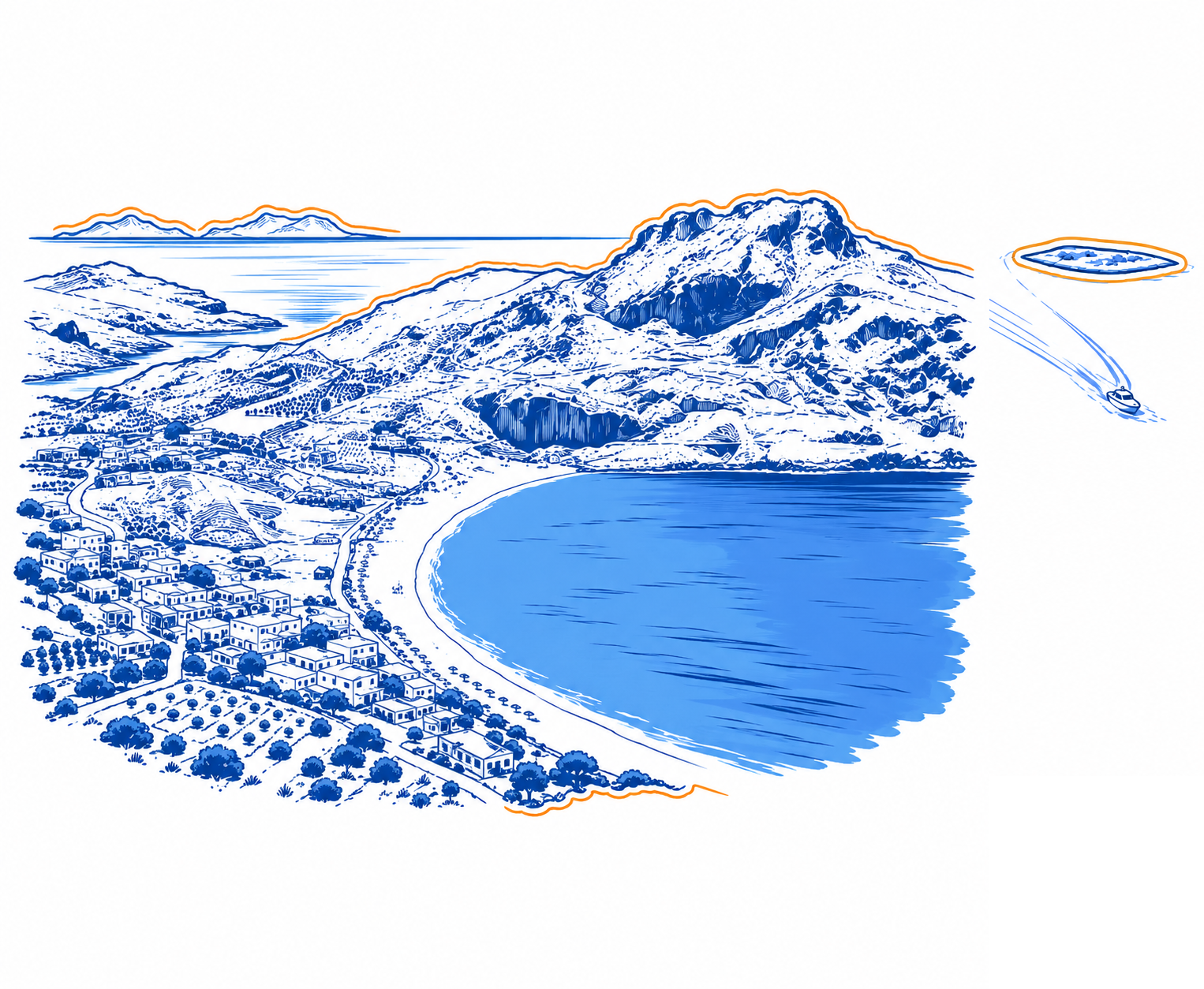
Greek islands with no people are exceptionally rare, but Greece is home to numerous uninhabited islands that have no permanent residents. Some are little more than rocky outcrops, while others are surprisingly large and feature beaches, wildlife, historic ruins or protected natural landscapes. Whether they are completely inaccessible, privately owned or simply too remote to support a community, these islands offer a fascinating glimpse into a quieter and largely untouched side of the Greek archipelago.
| Island — Description |
|---|
| Agios Georgios — Tiny volcanic islet near Santorini with no permanent residents and limited visitor access. |
| Alimia — Abandoned Dodecanese island known for ruins, anchorages, and complete absence of permanent inhabitants. |
| Antipsara — Remote rocky island west of Psara valued for wildlife and untouched natural landscapes. |
| Arkoudi — Small Ionian island covered in vegetation and visited mainly by private boats. |
| Aspronisi — Uninhabited volcanic islet near Santorini featuring dramatic cliffs and rugged scenery. |
| Atokos — Privately owned Ionian island famous for crystal-clear waters and secluded beaches. |
| Chrissi — Protected island south of Crete renowned for turquoise seas and cedar forests. |
| Despotiko — Archaeologically significant Cycladic island containing extensive ancient sanctuary remains. |
| Diaporos — Beautiful island off Halkidiki known for blue lagoons and luxury yacht visits. |
| Gyaros — Historically important exile island with abandoned facilities and protected wildlife habitats. |
| Kato Koufonisi — Quiet Cycladic island featuring isolated beaches and seasonal day-trip visitors. |
| Keros — Sacred archaeological island once central to early Cycladic civilization. |
| Makronisos — Historic island near Athens known for former political prison camps. |
| Moni — Small Saronic island inhabited only by free-roaming wildlife and day visitors. |
| Nea Kameni — Active volcanic island in Santorini’s caldera with striking geothermal landscapes. |
| Pachia — Remote forested islet in the Northern Aegean valued for its natural environment. |
| Palea Kameni — Volcanic islet famous for hot springs and mineral-rich waters. |
| Patroklos — Large uninhabited island in the Saronic Gulf with restricted development. |
| Petalas — Privately owned Ionian island characterized by dense vegetation and secluded coves. |
| Polyaigos — Largest uninhabited Greek island, celebrated for pristine beaches and rare wildlife. |
| Proti — Historic island off Messinia associated with ancient maritime activity and shipwrecks. |
| Rineia — Rural Cycladic island beside Mykonos containing archaeological and agricultural sites. |
| Ro — Tiny frontier island near Kastellorizo famous for its patriotic modern history. |
| Saliagos — Small islet near Antiparos notable for one of Greece’s earliest Neolithic settlements. |
| Sapientza — Protected island south of the Peloponnese known for forests and rare wildlife. |
| Saria — Mountainous island north of Karpathos featuring caves, ruins, and hiking routes. |
| Spinalonga — Historic fortified island best known for its former leper colony. |
| Strongyli — Easternmost Greek island, strategically located near Kastellorizo and the Turkish coast. |
When and Why?
Greek islands with no people are best suited to travellers who are fascinated by isolation, untouched landscapes, and places where nature dominates rather than tourism or permanent settlement. People searching for uninhabited Greek islands are often looking for destinations with no permanent population, no towns or villages, little or no infrastructure, and a strong sense of remoteness. Some are interested in boat trips, sailing routes, wildlife, conservation areas, abandoned settlements, or islands that exist almost entirely outside the tourism economy. These islands can be particularly appealing to adventurers, sailors, photographers, nature lovers, and travellers who enjoy discovering places that feel wild and largely unchanged by modern development. Most are not suitable for conventional holidays, as they typically lack accommodation, restaurants, transport services, healthcare facilities, and other amenities associated with inhabited islands. For many people, the appeal lies in the idea of experiencing a rare side of Greece where human presence is minimal, allowing dramatic coastlines, native wildlife, and natural landscapes to take centre stage in a way that is increasingly difficult to find elsewhere in the Mediterranean.
Back to Population
The Greek Island Directory is a project of passion where a love of Crete, Data Integrity and Directories converge to create something truly special for users: Learn More.
Last Updated on June 19, 2026 by admin