Sapientza
Sapientza is a small uninhabited island off the south coast of Messenia, just off Methoni, about 9 square kilometres of dense Mediterranean forest and maquis. Part of the Messenian Oinousses group with Schiza, it is covered in arbutus, holm oaks and strawberry trees, and has been declared a nature reserve for its flora and fauna — kri-kri goats, pheasants and rare plants — with no permanent buildings except an old 1885 lighthouse on its southern tip.
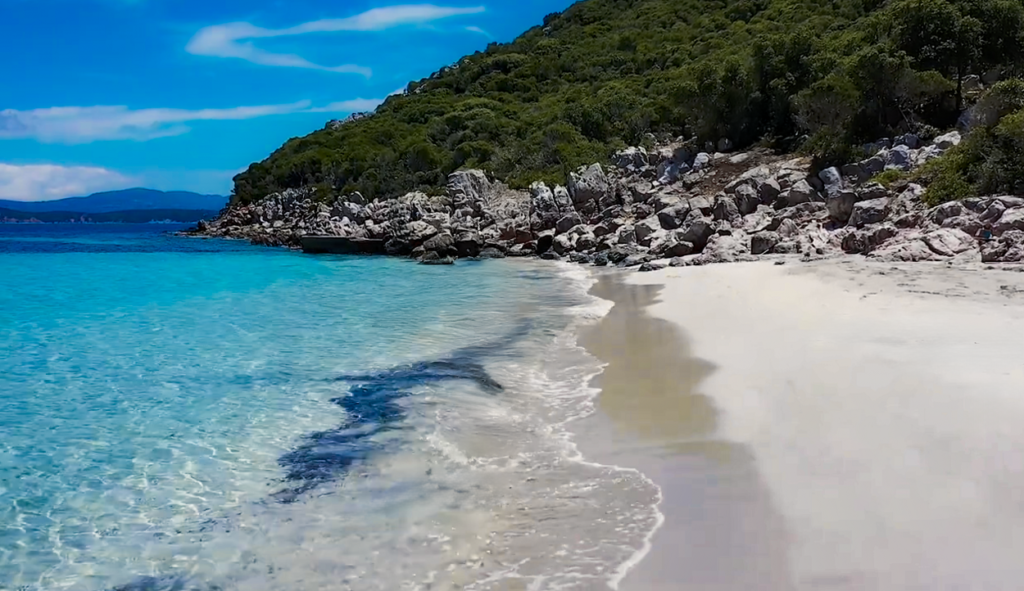
Visible from Methoni Castle, Sapientza is known for its deep north bay of Ammos and its wild, untouched character, accessible only by private boat. The waters around it are famous for wrecks, including a Roman sarcophagus wreck, and for some of the cleanest seas in the Peloponnese, but the island itself is strictly protected and closed to overnight stays, a green lump of wilderness in the Ionian.
The uninhabited 9 sq km island opposite Methoni with the only 10-metre arbutus forest in the Med
Sapientza is part of the Messenian Oinousses archipelago on the southwest coast of Messinia, opposite Methoni in the Peloponnese. The cluster includes Schiza as largest, Sapientza as second largest at 9.0 square kilometres, plus islets Venetiko, Agia Mariani, Avgo, Dyo Aderfia and Boba. Sapientza itself is about 1500 metres from the mainland, with a particularly steep and rocky coastline and only one sandy beach, Ammos, on its north side facing Methoni, though other coves show Caribbean-coloured water.
The island has lush vegetation with dense shrubland and Mediterranean plants, and is uninhabited except for wildlife. It has been a Listed Natural Monument since 1986 and included in Natura 2000 network GR2550003 as Nisoi Sapientza and Schiza, Akrotirio Akritas. In its central valley between small mountains lies Koumarodasos — the only arbutus forest in the Mediterranean, where arbutus trees reach 10 metres high — plus Spartolakka valley of fossilised pollen. Fauna includes large herds of Kri Kri Cretan wild goats, wild sheep, wild rabbits and many bird species, plus goats wandering the beach. The slopes are green and the waters are crystal-clear and exotic. At Porto Longo natural harbour in the southeast stands an 8-metre stone lighthouse built in 1885 at the request of Queen Victoria of England to aid ships on a dangerous ancient trade route, first operating on oil, extinguished in WWII and re-lit in 1944, electrified in 1989.
This is for you if you want a day of total wildness — snorkelling over ancient shipwrecks on a former trade route, hiking through a unique tall-tree forest, and seeing wild goats where only goats live. It is not for staying, shops or roads; there is a single church as the sole building.
FYI / ICYMI / Nuance
FYI Sapienza means wisdom in Italian, and the island actually lives up to it — nature’s wisdom is the point. ICYMI the waters are an open-air museum: because Sapientza sits directly on an ancient trade route, the seabed north of the island is filled with historic shipwrecks you can snorkel over in shallow water, which is why the Victorian lighthouse was so urgently requested. Nuance: to the southwest of Sapientza lies the Calypso Deep — also called the Oinousses Deep or Vavilov Deep — at 5,267 metres, the deepest point of the Mediterranean Sea, so the island’s cliffs drop almost straight into the abyss. The boat trip itself is the highlight, not a resort — and at the far tip you will spot the tiny heart-shaped islet that has become a symbol for Greek tourism.
Sources
- https://en.wikipedia.org/wiki/Messenian_Oinousses | archipelago comprises islands Schiza Sapientza islets rocks Venetiko Agia Mariani Avgo Dyo Aderfia Boba largest island Schiza only populated Sapientza southwest Oinousses deepest point Mediterranean Calypso Deep also known Oinousses Deep Vavilov Deep included Natura 2000 Island Area Sapientza 9.0
- https://www.visitpeloponnese.com/things-to-see-do/sapienza-island-methoni/ | Sapienza natural beauty boat trip highlight uninhabited island opposite Methoni snorkelling around ancient shipwrecks beautiful beaches Messinian Oinousses group included Natura 2000 Network together Cape Akritas 9 sq km second largest group Listed Natural Monument since 1986
- https://mediterraneandietunesco.org/cultural-natural-assets-in-greece/ | island size 9 square kilometers coastline particularly steep rocky only beach island Ammos located northern part opposite Methoni center northern part valley between small mountains only arbutus forest Mediterranean Sea arbutus trees height approximately 10 m area designated monument nature since 1986
- https://www.tripadvisor.co.za/Attraction_Review-g642197-d3923190-Reviews-Sapientza_Isle-Methoni_Messenia_Peloponnese.html | rich intact vegetation interesting fauna Kri Kri wild goats central part Koumarodasos forest arbutus Greek area 10-meter high arbutus trees Spartolakka valley fossilised pollen included European Network Natura 2000 natural harbor Porto Longo southeast side 8-meter high lighthouse built 1885 request Queen Victoria England
- https://www.youtube.com/watch?v=example | unique island covered ancient rare arbutus forest populated wild Cretan goats sits directly ancient trade route waters filled historic shipwrecks
Back to all Greek islands
The Greek Island Directory is a project of passion where a love of Crete, Data Integrity and Directories converge to create something truly special for users: Learn More.
Last Updated on September 2, 2026 by admin