
Small Greek islands without Airports
Small Greek islands without airports range from easy ferry trips near Athens to remote islands that require several connections to reach. This list covers the small islands in the Greek Island Directory that have no airport of their own, with a practical explanation of how each one is normally accessed.
Having no airport does not necessarily make an island difficult to reach. Some are minutes from the mainland or connected to major ferry hubs, while others depend on limited or seasonal boat services.
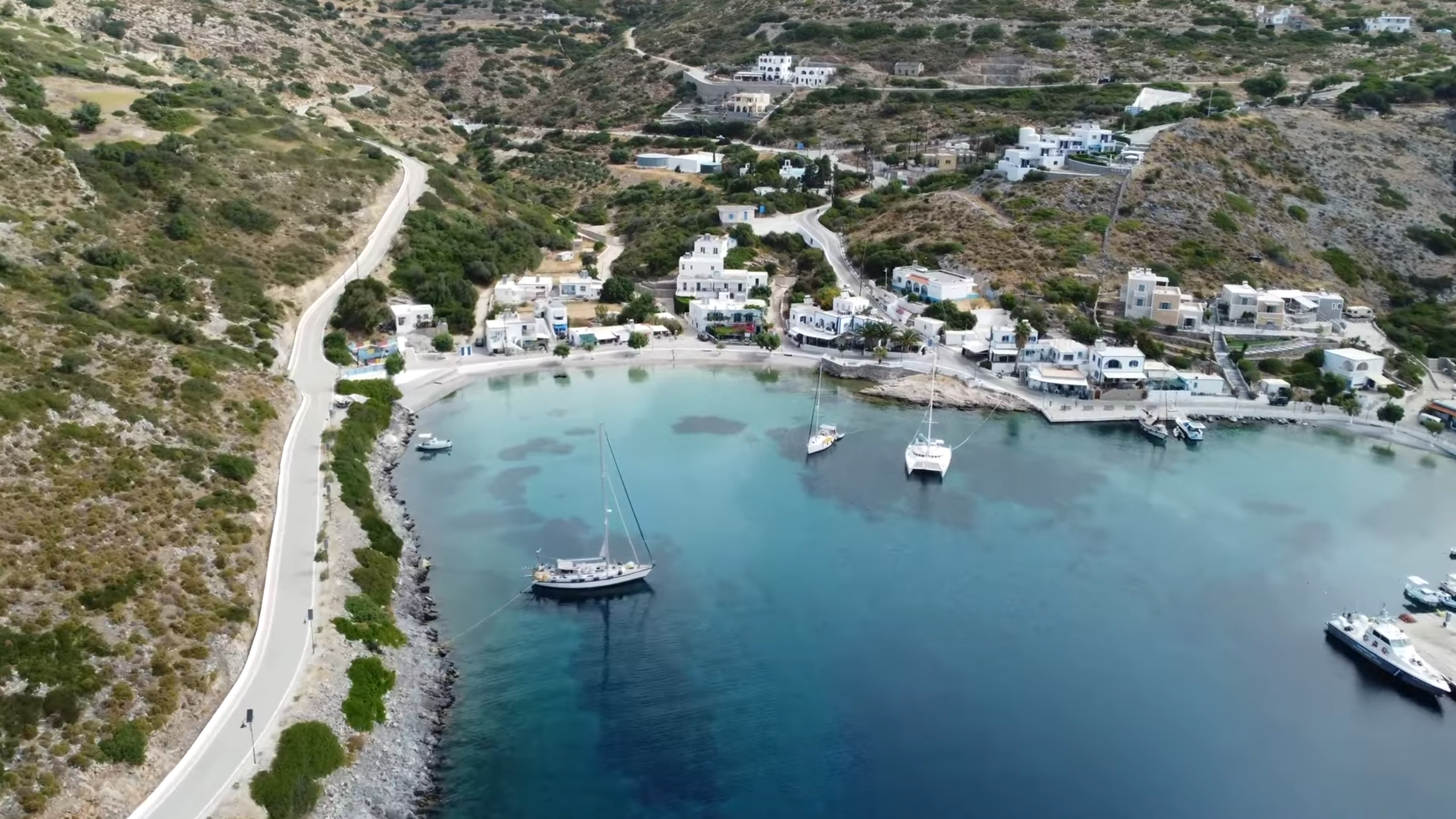
How I chose these islands
I checked the small islands in the Greek Island Directory and included those without an airport on the island itself. I then looked at the usual access route for each one, including direct ferries, local boats and transfers through nearby islands or mainland ports.
For this list, “without an airport” means exactly that: there is no airport on the island itself. An island can still be easy to reach if it has frequent ferry connections or sits close to an airport on a neighbouring island or the mainland.
| Island — Explanation |
|---|
| Thymaina — A tiny island accessed by ferry or local boat connections, primarily through nearby Ikaria and Fournoi. |
| Othonoi — Reached by ferry from Corfu, with no airport due to its remote and sparsely populated character. |
| Agistri — Easily accessed by ferry or hydrofoil from Athens despite having no airport of its own. |
| Dokos — A tiny undeveloped island accessed only by private boat or small local sea connections near Hydra. |
| Agathonisi — A remote Dodecanese island reached by ferry from nearby islands such as Samos, Patmos, and Kos. |
| Donousa — Accessed by ferry within the Small Cyclades network rather than by air travel. |
| Oinousses — Reached mainly by ferry from Chios due to its very small size and maritime character. |
| Pserimos — A tiny island near Kos accessed by boat and day-trip ferries rather than commercial flights. |
| Leipsoi — Connected by regional ferries through the Dodecanese island network instead of airport infrastructure. |
| Irakleia — Reached by ferry within the Small Cyclades, contributing to its peaceful and low-tourism atmosphere. |
| Elafonisos — Accessed by short ferry crossings from the Peloponnese mainland rather than air connections. |
| Meganisi — Typically reached via ferry from Lefkada and the nearby mainland airport at Preveza. |
| Antikythera — A highly remote island reached only by limited ferry services between Crete and the Peloponnese. |
| Kalamos — Accessed by ferry in the Ionian Sea, with no airport due to its small population and quiet character. |
| Paxos — Reached mainly by ferry from Corfu, whose airport serves as the main gateway to the island. |
| Kira Panagia — An isolated island with no commercial airport or regular tourism infrastructure, primarily visited by private boat. |
| Spetses — Reached by hydrofoil from Athens-area ports, helping preserve its elegant no-airport atmosphere. |
| Chalki — Accessed by ferry from Rhodes rather than direct air travel due to its tiny scale. |
| Gavdos — Reached by ferry from southern Crete, reflecting its remote location south of the mainland Greek islands. |
| Poros — Easily reached from Athens by ferry despite having no airport of its own. |
| Folegandros — Accessed by Cycladic ferry routes, contributing to its quieter atmosphere compared with airport-connected islands. |
| Kimolos — Reached by ferry via nearby Milos and wider Cycladic ferry connections. |
| Anafi — A remote Cycladic island accessed mainly by ferry from Santorini and other nearby islands. |
| Nisyros — Reached by ferry from Kos and Rhodes, with no airport due to its volcanic terrain and small scale. |
| Sikinos — Accessed through ferry connections in the southern Cyclades rather than direct flights. |
| Agios Efstratios — A remote northern Aegean island connected primarily through regional ferry services. |
| Psara — Reached by ferry from Chios due to its isolated eastern Aegean location. |
| Antiparos — Accessed by short ferry transfer from nearby Paros, whose airport serves the region. |
| Fournoi — Connected by ferry routes between Ikaria, Samos, and Patmos rather than air travel. |
| Patmos — Reached by ferry through the Dodecanese network despite being a major cultural and tourism island. |
| Hydra — Famous for its no-car, no-airport atmosphere and reached exclusively by ferry from Athens. |
| Symi — Accessed mainly by ferry from Rhodes, helping preserve its traditional harbour character. |
| Alonissos — Typically reached via nearby Skiathos airport followed by ferry transfer through the Sporades. |
| Tilos — Connected by ferry between Rhodes and Kos rather than by direct flights. |
| Sifnos — Reached by ferry from Athens and neighbouring Cycladic islands, contributing to its more relaxed tourism pace. |
| Serifos — Accessed by ferry from Piraeus as part of the western Cyclades ferry network. |
| Aegina — Easily accessible by fast ferry from Athens despite having no airport. |
| Salamina — Connected directly to the Athens mainland by frequent ferry services instead of air travel. |
| Skopelos — Typically accessed through nearby Skiathos airport followed by ferry transfer within the Sporades. |
My pick
One thing I must admit I really like about this category is again: islands are inherently difficult to get to without commercial access and at that, any access. Smaller Greek islands are naturally more personable and feel local. In my mind, if i’m trying to get away from the world, i’m picking a small Greek island WITHOUT an airport, and my picking Agistri – close to the mainland if needed but inaccessible by air.
No airport does not always mean difficult access
The biggest difference between these islands is not whether they have an airport—they all lack one—but what happens after you land elsewhere. Agistri, Aegina, Salamina and Elafonisos can be reached with relatively short sea crossings, while islands such as Antikythera, Gavdos and Agios Efstratios require more careful planning.
What makes them worth it for you?
Small Greek islands without airports are best suited to travellers and prospective residents who are comfortable prioritising atmosphere and simplicity over speed and convenience. Reaching them usually requires ferries or boat transfers, which naturally limits visitor volume and often preserves a quieter, more local character. For travellers, they work well for slower holidays, island-hopping, and intentional escapes where the journey is part of the experience. For residents, they can support a calmer, more community-oriented lifestyle, though with greater dependence on nearby hubs for healthcare, administration, and major services. The trade-off is reduced flexibility—travel takes longer, transport can be weather-dependent, and spontaneous movement is harder. They’re less suited to tight schedules or convenience-first living. Overall, small airport-free islands fit people who value lower intensity, reduced development, and a stronger sense of separation from mainstream tourism.
Sources
- https://hcaa.gov.gr/en/foreis-leitoyrgias-aerodromion
- https://hcaa.gov.gr/en/domains/aerodromes/airports
- https://www.visitgreece.gr/transportation
- https://www.visitgreece.gr/transportation/by-sea
- https://www.ynanp.gr/en
- https://www.statistics.gr/en/2021-census-pop-hous
- https://www.statistics.gr/en/2021-census-res-pop-results
- https://www.visitgreece.gr/islands
- https://www.aegeanislands.gr/plan-your-trip
- https://www.aegeanislands.gr/islands/lipsi
Back to Small Greek islands
The Greek Island Directory is a project of passion where a love of Crete, Data Integrity and Directories converge to create something truly special for users: Learn More.
Last Updated on July 16, 2026 by admin