
Volcanic Greek islands
Volcanic Greek islands are concentrated mainly in the southern and central Aegean Sea, where past and present volcanic activity has shaped dramatic landscapes, calderas, geothermal features, and distinctive coastlines. These islands are often characterised by rugged terrain, darker rock formations, and unusual geological scenery that sets them apart from more typical sandy or green island environments.
| Island | Description |
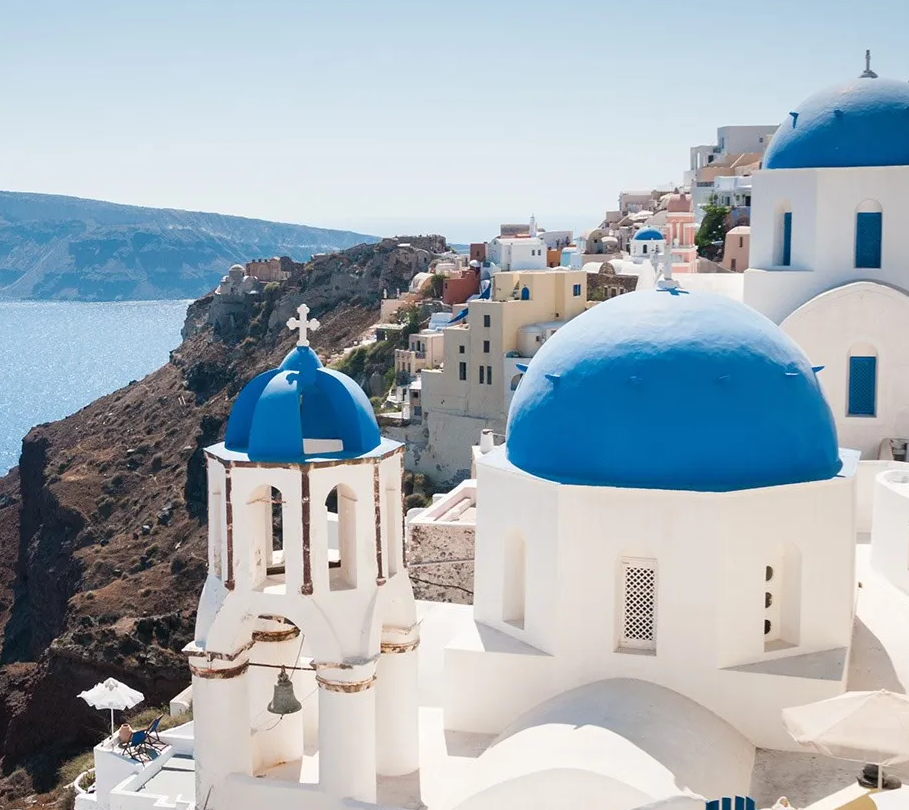
| Santorini — The definitive volcanic Greek island, globally known for its flooded caldera, volcanic cliffs, lava layers, and one of the most important eruptions in human history. |
| Milos — One of the most geologically volcanic islands in Greece, defined by colourful mineral landscapes, fumaroles, hot springs, and dramatic volcanic rock formations. |
| Nisyros — A living volcanic island centred around a large active hydrothermal crater system that remains one of the clearest volcanic landscapes in the Aegean. |
| Kos — Included because of its major volcanic history and proximity to the South Aegean Volcanic Arc, especially around volcanic deposits and geothermal zones. |
| Gyali — A small but intensely volcanic island known for obsidian and pumice extraction, with visibly volcanic geology dominating the landscape. |
| Palea Kameni — Essentially a volcanic cone emerging inside the Santorini caldera, formed directly from volcanic activity. |
| Nea Kameni — One of the clearest active volcanic landforms in Greece, consisting almost entirely of recent lava formations within the Santorini caldera. |
| Therasia — Part of the original Santorini volcanic complex, retaining visible caldera geology and volcanic terrain. |
| Anafi — Included cautiously because although not volcanically active itself, its geology and tectonic association tie closely to the volcanic arc environment. |
| Kimolos — Strong volcanic and geothermal identity, with mineral-rich terrain and clear volcanic origins closely linked to nearby Milos. |
| Polyaigos — Volcanically formed and geologically tied to the Milos-Kimolos volcanic complex, though less visibly volcanic in popular perception. |
Geological Masterpieces:
Volcanic Greek islands are best suited to travellers and prospective residents who prioritise geology, atmosphere, and dramatic landscapes over conventional beach comfort or simplicity. Volcanic terrain creates distinctive scenery—dark cliffs, calderas, rugged coastlines, geothermal features, and unusual beach formations—which appeals strongly to photographers, couples, hikers, and people seeking a visually memorable environment. For travellers, these islands work especially well for shorter stays focused on scenery, exploration, and atmosphere rather than nonstop swimming or resort-style relaxation. For residents, volcanic islands can offer a strong sense of identity and uniqueness, though often with more tourism pressure and less everyday practicality in highly visited areas. The trade-off is usability: terrain can be steep, beaches less accessible, and infrastructure more oriented toward tourism than long-term comfort. Overall, volcanic islands suit people who value visual impact, distinctiveness, and geological character over ease, softness, or low-effort living.
Back to Geography
You might also want to check out:
- Greenest Greek islands
- Greek islands by wind level
- Greek islands by elevation
- Greek islands by island group
- Greek islands by vibe
The Greek Island Directory is a project of passion where a love of Crete, Data Integrity and Directories converge to create something truly special for users: Learn More.
Last Updated on May 29, 2026 by admin