
Naxos
Naxos is the largest island in the Cyclades and one of the most well-rounded, combining long sandy beaches, fertile inland landscapes, traditional villages, and a strong local economy with a growing but still balanced tourism scene.
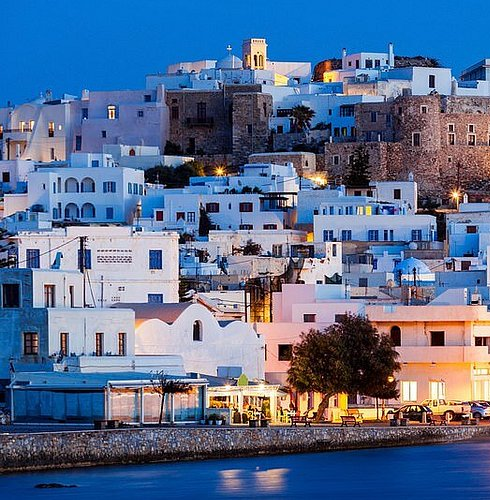
Overview
Naxos has been inhabited since prehistoric times and became a major centre of early Cycladic culture, later flourishing in the archaic period as a powerful island in the Aegean, known for its wealth, marble resources, and monumental architecture such as the unfinished temple of Apollo marked today by the Portara.
Through antiquity and the Byzantine period, Naxos remained an important regional island, later becoming the seat of the Duchy of the Archipelago under Venetian rule (13th century), which left a lasting imprint on its settlements, particularly in Naxos Town where medieval towers and fortifications still stand.
Unlike many smaller Cycladic islands, Naxos developed a strong agricultural base due to its fertile plains and higher rainfall, supporting a stable local population and economy alongside tourism, with mountain villages and inland production playing a key role in its identity.
Today, Naxos is one of the most versatile islands in Greece, offering a mix of beaches, history, food, and local culture without the intensity or pricing of nearby hotspots, making it a popular choice for travellers looking for a more balanced Cycladic experience.
| Name | Naxos • Νάξος • Kerkyra |
| Demonym | Naxian |
| Dialect | Standard Modern Greek (Cycladic variety). |
| Islands Group | Cyclades |
| Sea Group | Aegean Sea |
| Vibe | Balanced and authentic; combines beach tourism with strong local life and agriculture. |
| Tourism Level | Moderate to high and seasonal, but less intense than Mykonos or Santorini. |
| Cost | Mid-range; generally more affordable than major Cycladic hotspots. |
| Best Months | May–June and September–October offer warm weather with fewer crowds. |
| Wind | Moderate–strong; influenced by Meltemi winds in summer. |
| Beach Type | Long sandy beaches, especially along the west coast. |
| Food | Strong agricultural base; known for local cheeses, potatoes, meats, and traditional dishes. |
| Nightlife | Moderate; centred in Naxos Town and beach areas, but not club-focused. |
| Family-Friendly | Very; wide beaches, relaxed atmosphere, and good infrastructure. |
| Access | Domestic airport and frequent ferries from Piraeus and nearby islands. |
| Transport | Bus network, taxis, and private transport options. |
| Car Rental | Widely available and recommended for exploring inland villages. |
| Roads | Good overall, with mountain roads inland. |
| Walkability | Moderate in Naxos Town; low elsewhere due to size. |
| Connectivity | Good mobile and internet coverage in most areas. |
| Infrastructure | Well-developed but less strained than high-volume islands. |
| Healthcare | Hospital and medical centres on the island. |
| ATM | Widely available in towns and tourist areas. |
| Accommodation | Wide range from budget stays to boutique hotels and villas. |
| Typical Stay | Commonly 3–5 days. |
| Population | 20,405 |
| Expat Community | Small to moderate, often long-term lifestyle residents. |
| Property and Living | More accessible than Mykonos/Santorini; active but less overheated market. |
| Size | ~430 km² |
| Geography | Largest Cycladic island with fertile plains, mountains, and long coastlines. |
| Elevation | Highest point ~1,004 m (Mount Zas). |
| Culture | Ancient Greek, Byzantine, and Venetian influences combined with strong ongoing rural traditions and local identity. |
Back to Islands
Similar Islands:
Paros • Crete • Andros • Tinos • Rhodes
Under:
- Traditional Greek islands | Scenic Greek islands | Diverse Greek islands
- Greek islands with High Tourism
- Best Greek islands to visit in: May | June | July | August | September
- Greek islands Accessible By Boat
- Greek islands Accessible By Ferry
- Greek islands With Domestic Airports
- Greek islands with over 10,000 people
The Greek Island Directory is a project of passion where a love of Crete, Data Integrity and Directories converge to create something truly special for users: Learn More.
Last Updated on July 16, 2026 by admin