
Important Greek islands
Importance can be measured in many different ways. Some Greek islands are significant because of their role in history, others for their cultural influence, economic contribution, strategic location or impact on tourism. Certain islands have shaped major events, served as centres of trade and religion, or played a lasting role in the development of Greek civilisation. When discussing the most important Greek islands, the answer often extends far beyond popularity and considers their broader significance within Greece and the wider Mediterranean.
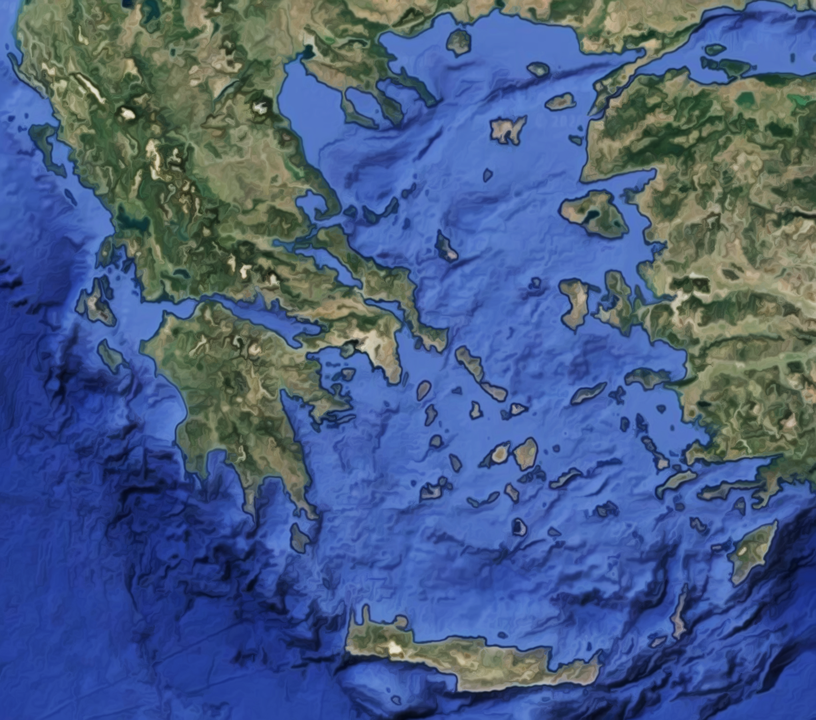
| Island — Reason |
|---|
| Crete — Birthplace of the Minoan civilisation, Greece’s largest island, and one of the most important cultural and historical centres in the Mediterranean. |
| Delos — Sacred island of Apollo and Artemis and one of the most important religious centres of the ancient Greek world. |
| Rhodes — Major ancient, medieval and maritime power with enormous strategic importance. |
| Samos — Home of the Heraion, major centre of ancient science, engineering and trade. |
| Samothrace — Sanctuary of the Great Gods made it one of antiquity’s most important religious destinations. |
| Samos — Strongly associated with Hera and her cult. |
| Samothrace — Sacred island of the mysterious Great Gods and one of the most important religious islands in Greek tradition.. |
| Corfu — Historically vital gateway between Greece and Western Europe and one of the country’s most important strategic islands. |
Tier 2: Islands with the next most importance |
| Aegina — Ancient naval and commercial power and home to the Temple of Aphaia. |
| Chios — Major maritime, commercial and cultural island with centuries of regional influence. |
| Kos — Associated with Hippocrates and one of the most important islands in the history of medicine. |
| Lesbos — Major centre of ancient literature, philosophy and culture. |
| Naxos — One of the most influential islands in Cycladic history and mythology. |
| Paros — Source of the famous Parian marble that shaped much of the ancient Greek world. |
| Santorini — Home to Akrotiri and one of the most significant prehistoric sites in the Aegean. |
| Lemnos — Important from prehistory through classical and modern periods. |
Greek islands of importance:
Important Greek islands are generally best suited to travellers who want to understand the Greek islands through their overall significance rather than focusing on a single attribute such as beaches, nightlife, or scenery. They tend to appeal to first-time visitors, history enthusiasts, cultural travellers, researchers, students, and anyone interested in exploring destinations that have played influential roles in Greek history, mythology, culture, tourism, transportation, religion, politics, or regional identity. People searching for important Greek islands are often looking for places that have shaped the story of Greece in meaningful ways, whether through ancient civilisations, major historical events, religious significance, maritime influence, economic importance, or cultural impact. These islands can be particularly attractive to travellers who enjoy gaining a deeper understanding of the country while still experiencing its landscapes, villages, beaches, and local traditions. They are generally less suited to visitors seeking highly specialised travel experiences focused on a single niche interest. For many travellers, the appeal lies in visiting islands that have helped define Greece itself, offering a richer appreciation of how geography, history, culture, and mythology have combined over centuries to create some of the most influential and recognisable destinations in the Mediterranean.
Back to Greek islands with History
The Greek Island Directory is a project of passion where a love of Crete, Data Integrity and Directories converge to create something truly special for users: Learn More.
Last Updated on June 10, 2026 by admin