
Oldest Greek islands
When people talk about the oldest Greek islands, they are usually referring to islands with the earliest known evidence of human settlement rather than the age of the islands themselves. Archaeological discoveries have shown that some islands have been inhabited since prehistoric times, with traces of human activity dating back thousands of years. These islands played important roles in the development of early Aegean civilisations and offer a fascinating window into some of the oldest chapters of human history in Greece.
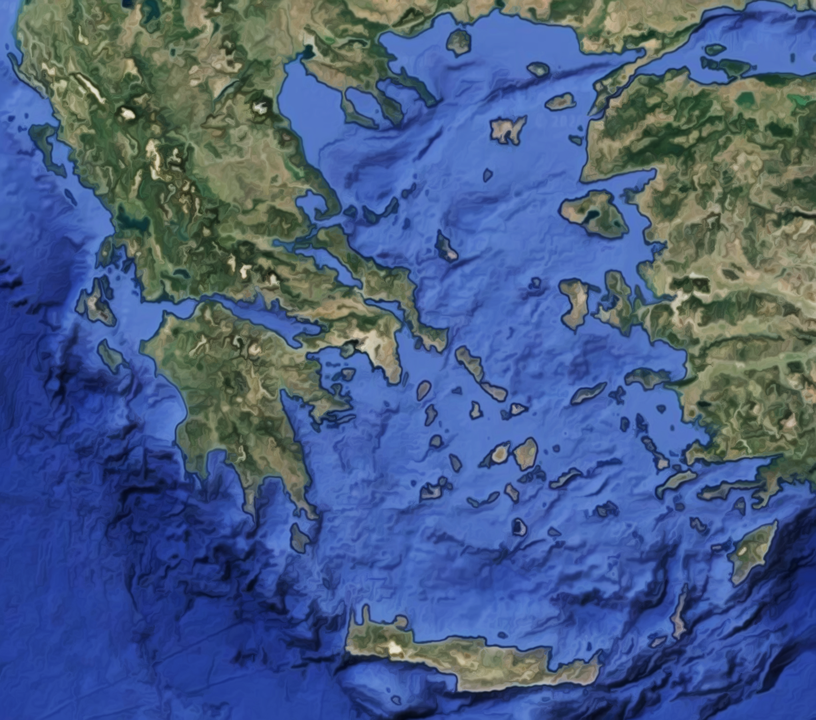
| Island — Description |
|---|
| Crete — One of the earliest centres of civilisation in Europe and home to the Minoans. |
| Kea — Important Neolithic and Early Bronze Age settlement evidence. |
| Lemnos — Home to Poliochni, one of Europe’s oldest proto-urban settlements. |
| Saliagos — One of the earliest known Neolithic settlements in the Cyclades. |
| Santorini — Evidence of very early settlement preceding Akrotiri’s later prominence. |
| Andros — Important prehistoric occupation evidence. |
| Chios — Long record of prehistoric settlement. |
| Kythnos — Significant early Cycladic occupation. |
| Milos — Obsidian trade made it important from the Neolithic period onward. |
| Naxos — One of the key islands of the Early Cycladic civilisation. |
| Paros — Important prehistoric and Early Cycladic settlement history. |
| Syros — Major Early Cycladic centre, particularly Kastri. |
Older than time
The oldest Greek islands are generally best suited to travellers who are fascinated by ancient history, early civilizations, archaeology, mythology, and the deep human story of the Aegean. They tend to appeal to history enthusiasts, cultural travellers, students, researchers, photographers, and anyone interested in exploring places that have been inhabited, settled, worshipped, traded, and celebrated for thousands of years. People searching for the oldest Greek islands are often looking for destinations associated with prehistoric settlements, Bronze Age cultures, ancient sanctuaries, early maritime trade networks, and some of the earliest chapters of Greek civilisation. These islands can be particularly attractive to visitors who enjoy combining archaeological discovery with mythology, museums, traditional villages, and dramatic landscapes that have witnessed millennia of human activity. They are generally less suited to travellers whose primary focus is nightlife, luxury tourism, or purely beach-oriented holidays. For many visitors, the appeal lies in experiencing islands where the roots of Greek history run exceptionally deep, offering a rare opportunity to walk through landscapes that have played a role in human history since antiquity and to connect with some of the oldest continuously inhabited and culturally significant places in the Mediterranean world.
Back to Greek islands with History
The Greek Island Directory is a project of passion where a love of Crete, Data Integrity and Directories converge to create something truly special for users: Learn More.
Last Updated on June 10, 2026 by admin