Greek islands with the most Ruins
Greek islands with the most Ruins are islands where history is layered into every hillside, harbour and olive grove, where you walk through Minoan palaces, Doric temples, Venetian fortresses and Byzantine monasteries all in a single afternoon, with marble columns glowing against the Aegean and ancient stories still etched into the stone.
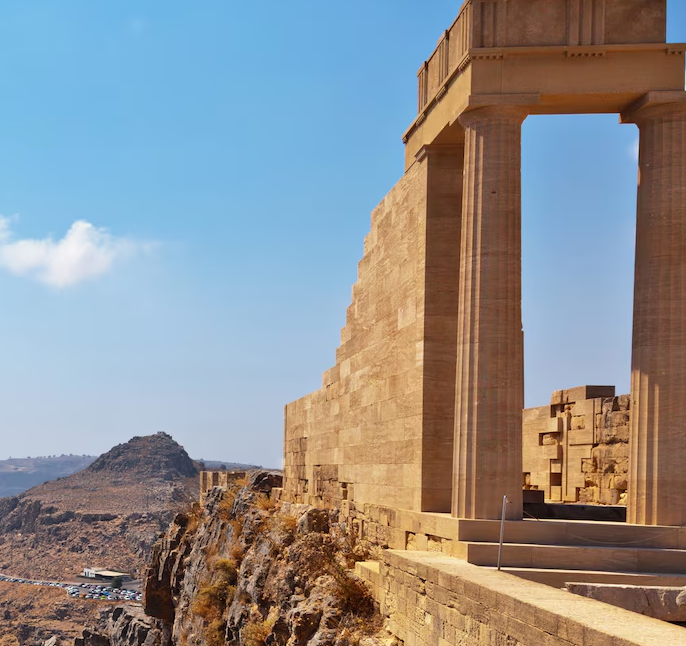
They are islands where the past feels alive and ever-present, with archaeological sites tucked behind beaches, hilltop acropolises offering sweeping sea views, quiet chapels built from ancient fragments, and museums overflowing with pottery, statues and mosaics, creating that sense of wandering through centuries with every step you take.
| Island | Description |
|---|---|
| Delos | Delos is home to one of most important archaeological sites in world, mythical birthplace of twins Apollo and Artemis, splendid Ancient Delos was shrine turned sacred treasury and commercial center, this UNESCO World Heritage Site is one of most important archaeological sites in Greece, once ancient city of 25000 now deserted island home of cats and excavation experts with vast array archaeological sites ancient streets temples mosaics statues like Lions of Delos, Temple of Apollo Terrace of Lions sprawling marketplace — elite densest ruins in Greece. |
| Crete | Island’s most significant landmark is Palace of Knossos which once stood as heart of Minoan civilization, largest Bronze Age archaeological site with impressive ruins colorful frescoes glimpse into Minoan civilization flourished over 3500 years ago, plus famous archaeological sites such as Minoan Palace of Knossos, Phaistos, Malia and Kato Zakros — elite for Minoan palace complexes. |
| Rhodes | Yet Rhodes also boasts significant ancient sites ruins of Acropolis of Rhodes with Temple of Apollo and ancient stadium offer captivating insight into ancient past, plus Medieval City of Rhodes one of Europe’s best-preserved fortified medieval towns — elite for Acropolis of Lindos plus ancient stadium plus medieval ruins. |
| Santorini | Most renowned sites are on Delos UNESCO sacred and Akrotiri on Santorini remarkably preserved Minoan settlement — elite for Akrotiri Bronze Age frescoed town buried by volcano. |
| Naxos | Temple of Apollo Portara plus Temple of Demeter at Sangri and Kouros statues — elite Cycladic large classical ruins. |
| Paros | Sanctuary of Apollo and Asclepius, Parian marble quarries supplying Venus de Milo — elite for ancient marble source ruins. |
| Samos | Pythagoreion and Heraion UNESCO World Heritage Site with Tunnel of Eupalinos aqueduct — elite for engineering ruins. |
| Kos | Asclepieion of Kos where Hippocrates taught, plus Agora and Roman Odeon — elite for medical history ruins. |
| Lesbos | Eastern Aegean with ancient Mytilene, deep prehistoric layers and classical remains — elite for deep prehistoric layers. |
| Aegina | Temple of Aphaia one of best preserved Doric temples, plus Kolona acropolis — elite for Classical temples. |
| Corfu | Paleopolis and Mon Repos Temple of Artemis, ancient Kerkyra — elite for Classical temples. |
| Samothrace | Sanctuary of Great Gods where Winged Victory of Samothrace found — elite for mystery cult ruins. |
| Mykonos | Gateway to Delos plus Mykonos archaeological museum and Ftelia Neolithic settlement — strong as base plus own ruins. |
| Syros | Prehistoric settlement at Kastri and Chalandriani Cycladic cemeteries — strong early Cycladic ruins. |
| Andros | Zagora Geometric settlement and Paleopolis ancient capital with Temple of Dionysus — strong for Geometric town preservation. |
| Tinos | Sanctuary of Poseidon and Amphitrite at Kionia plus marble quarries — strong for Poseidon sanctuary. |
| Milos | Phylakopi Bronze Age city three successive cities plus ancient theatre and catacombs — strong for three layered Minoan to Roman. |
| Sifnos | Agios Andreas Mycenaean acropolis with fortified citadel and Agios Nikitas ancient tower network — strong for acropolis ruins. |
| Serifos | White Tower Hellenistic watchtower plus ancient mines — strong for mining ruins. |
| Kythnos | Vryokastro ancient capital continuously inhabited 12th century BC to 7th AD plus Mesolithic settlement — strong for long chronology. |
| Kea | Four ancient poleis Ioulis, Korissia, Karthaia, Poiessa with Temple of Athena at Karthaia — strong for four city-states ruins. |
| Thassos | Ancient Agora, theatre and Acropolis with marble quarries of Aliki — strong northern Aegean classical. |
| Patmos | Monastery of Saint John UNESCO plus Cave of Apocalypse but also ancient acropolis at Kastelli — strong for Byzantine plus ancient. |
| Ikaria | Drakano Tower and Nas temple of Artemis Tauropolos — strong for tower ruins. |
| Zakynthos | Homeric references, Zakynthos acropolis — strong for Mycenaean plus Homeric lore. |
| Kefalonia | Homeric references, ancient Same and Krani — strong for Mycenaean plus Homeric lore. |
| Ithaca | Homeric references Ithaca ancient Aetos and Polis cave — strong for Mycenaean plus Homeric lore. |
| Lefkada | Ancient Leucas city walls and Nidri early Helladic tombs — strong for Lefkadian connection to Odyssey. |
Who it suits and why
Best for travellers who want history on the beach. These islands suit those who love ancient worlds on foot – headed by Crete for Knossos and Phaistos, Delos next to Mykonos for an entire sacred island, Rhodes for the Acropolis of Lindos and Old Town, Naxos for the Portara and Santorini for Akrotiri. Ideal if you want a swim in the morning and a 3,000-year-old palace in the afternoon.
Less suited to those who want pure beach time with no planning. If you want only sand, sunbeds and beach bars, dislike walking in heat or paying for guides and tickets, or want late nights without early starts for sites, a quieter beach-led island will be more comfortable.
What to keep in mind
The biggest ruins are popular and hot in summer. Crete, Rhodes, Delos and Santorini all have direct UK flights of 3 to 4.5 hours May to October or short ferries of 1 to 5 hours from Athens, but key sites like Knossos, Lindos and Delos need pre-booked timed tickets and sell out in July and August.
On the ground go early and prepared. Sites often open at 8am with little shade and uneven marble paths, so bring water, hat and trainers, and hire a licensed guide or audio guide for context. Many sites close early on Mondays or in winter and Delos is only reached by 30-minute boat trips from Mykonos that do not run in high winds.
Sources
- https://www.viator.com/tours/Mykonos/Delos-Tour-from-Mykonos-Island/d958-86342P275 — Delos is home to one of most important archaeological sites in world. Delve into ancient Greece with guided visit of UNESCO-listed ruins for insights into history and significance. Visit one of top ancient Greek ruins in world from Mykonos. Used for Delos most important.
- https://www.lonelyplanet.com/articles/best-ancient-ruins-greece — Cyclades fulfill collective name kyklos means circle by encircling sacred island of Delos. Mythical birthplace of twins Apollo and Artemis splendid Ancient Delos was shrine turned sacred treasury and commercial center. This UNESCO World Heritage Site is one of most important archaeological sites in Greece. Used for Delos sacred treasury.
- https://www.ferryscanner.com/en/blog/best-greek-islands-for-history — Yet Rhodes also boasts significant ancient sites ruins of Acropolis of Rhodes with Temple of Apollo and ancient stadium offer captivating insight. Island’s most significant landmark is Palace of Knossos which once stood as heart of Minoan civilization. Used for Rhodes and Knossos.
- https://en.wikipedia.org/wiki/Knossos — Knossos is archaeological site and ancient urban centre in Crete Greece. Site occupied from Neolithic period into first millennium AD and became largest and best-known centre of Minoan civilisation. Used for Knossos largest centre.
- https://toptours.ai/destinations/aegean-islands/guides/ancient-ruins-and-archaeological-sites — Which Aegean Islands have best ancient ruins? Most renowned sites are on Delos UNESCO sacred and Akrotiri on Santorini remarkably preserved Minoan settlement. Rhodes boasts impressive ancient architecture and its Acropolis while Crete offers extensive Minoan palace complexes like Knossos. Used for Akrotiri Santorini plus Rhodes Acropolis plus Crete palaces.
- https://wanderlog.com/place/details/22510/delos — With ruins of this UNESCO World Heritage Site largely intact it’s not difficult to imagine Ancient Delos in original splendour. Delos birthplace of Apollo and UNESCO World Heritage Site is described as extraordinary unforgettable place with vast array archaeological sites ancient streets temples mosaics statues like Lions of Delos. Used for vast array sites.
- https://www.ferryhopper.com/en/blog/featured/best-greek-islands-sightseeing — Sanctuary and ancient city are in great condition giving visitors unique opportunity to discover everyday life of inhabitants. Due to great importance of findings discovered Delos is designated UNESCO World Heritage Site. Recommend visiting sanctuary of Apollo and Terrace of Lions as well as museum of Delos with unique collection ancient pottery idols sculptures. Used for sanctuary of Apollo Terrace of Lions.
- https://www.civitatis.com/en/greek-islands/?page=5 — Visit archaeological sites of Delos mythical birthplace of Apollo or wander medieval streets of Rhodes Old Town UNESCO World Heritage site. For nature enthusiasts hike Samaria Gorge in Crete or relax on pristine beaches of Naxos. Used for Delos plus Rhodes Old Town UNESCO.
- https://www.tenontours.com/blog/a-guide-to-the-greek-islands/ — On Crete you’ll find some of most significant attractions in Greek islands: famous archaeological sites such as Minoan Palace of Knossos, Phaistos, Malia and Kato Zakros. Used for Crete four palaces.
Back to “Most”
The Greek Island Directory is a project of passion where a love of Crete, Data Integrity and Directories converge to create something truly special for users: Learn More.
Last Updated on August 7, 2026 by admin