Greek islands with the most Earthquakes
Greek islands with the most Earthquakes are clustered where the Hellenic trench meets the Eurasian plate, so a handful of islands get shaken far more often than the rest of Greece.
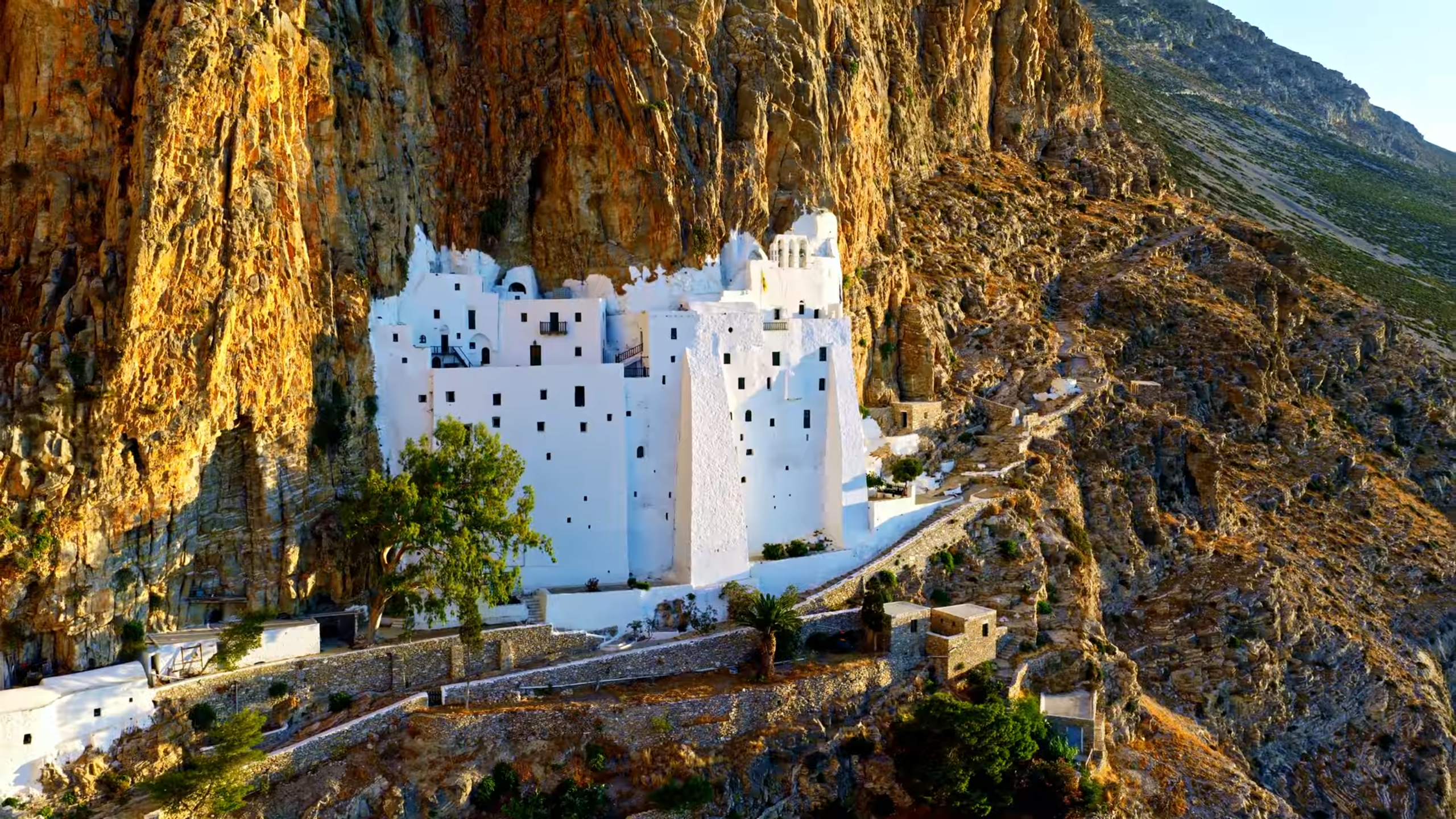
This guide compares islands based on frequency, historical impact, and seismic risk to find where quakes are most common, with enough context for understanding what that means for visiting rather than just a hazard statistic.
| Island | Description |
|---|---|
| Kefalonia | Central Ionian Islands stand out as most seismically hazardous area in Greece EAK 2003, Cephalonia has hosted two Mw ≥6.7 earthquakes within 30-year span, suffered numerous earthquakes 6.0 < MS < 7.5 in last 500 years, with over 113 recorded earthquakes between Kefalonia and Zakynthos in August 1953 alone. |
| Zakynthos | Islands of Cephalonia, Ithaki, Lefkada and Zakynthos experience destructive earthquakes repeatedly, 1953 sequence Mw6.29, Mw6.53 and Mw6.81 on 9, 11 and 12 August, Greek Seismic Code places Levkas-Cephalonia-Zakinthos in Zone III PGA 0.36g highest in Greece. |
| Lefkada | Same as Kefalonia and Zakynthos – central part of Ionian Islands is most seismically active region of Greece due to proximity to CTFZ and onshore active faults, magnitudes 6.2 to 6.7 since medieval times, most seismically active region in Greece and among most seismogenic in Europe. |
| Ithaca | Islands of Cephalonia, Ithaki, Lefkada and Zakynthos experience destructive earthquakes repeatedly, Central Ionian most hazardous per EAK 2003, Ithaki severely damaged in 1953 M7.2 southeastern Kefalonia event. |
| Amorgos | 09.07.1956 earthquake and tsunami in Amorgos with epicenter 5km East/Northeast from Santorini M7.8 considered one of strongest seismic events in Greece in 20th century, highest run-up 25m on southern coast of Amorgos, fault near Anydros source of 1956 M7.6 causing widespread damage. |
| Santorini | Same 1956 event – earthquake recorded in Aegean Sea July 9 1956 at 3:11 GMT with epicenter 5km from Santorini M7.8, Santorini devastated by 7.5 Mw earthquake sourced from submarine fault near Amorgos, strongest earthquake in Greece during 20th century and inflicted extensive damage across Santorini, Amorgos, Anafi, Astypalaea, Ios, Paros, Naxos. |
| Crete | Area of Ionian Islands is by far most seismically active region, but Crete sits on Hellenic subduction where number of towns destroyed exceeded 100 in 1303 event, among highest historical seismicity in Mediterranean. |
| Anafi | Listed as affected by 1956 M7.8 strongest earthquake in 20th century alongside Santorini, Amorgos, Astypalaea, Ios, Paros, Naxos, Kalymnos, Leros, Patmos, Lipsi — direct impact from Amorgos graben. |
| Astypalaia | Same 1956 extensive damage list includes Astypalaea — strong secondary impact from Hellenic volcanic arc twin earthquakes. |
| Ios | Same extensive damage list includes Ios — documented impact from 1956 M7.8. |
| Corfu | Ionian Sea characterized by very high seismicity, magnitudes 6.0 to 6.5 for Corfu since medieval times, velocity field shows NW motion transverse to collision front, part of most active European margin. |
| Kos | Dodecanese on Hellenic arc with repeated M6.5+ historical events and high hazard in South Aegean. |
| Paros | Listed among islands with extensive damage in 1956 M7.8 Amorgos earthquake — Paros, Naxos, Kalymnos, Leros, Patmos, Lipsi — strong seismic exposure in central Cyclades graben. |
| Naxos | Same as Paros — extensive damage across several islands including Paros, Naxos — 1956 event. |
| Kalymnos | Same extensive damage list includes Kalymnos — strong exposure to Amorgos-Santorini graben. |
| Leros | Same extensive damage list includes Leros — strong exposure. |
| Patmos | Same extensive damage list includes Patmos — strong exposure. |
| Lipsi | Same extensive damage list includes Lipsi — strong exposure. |
| Rhodes | Eastern Hellenic arc high seismicity, M7+ historical events, PGA Zone III, significant hazard. |
| Samos | Eastern Aegean near North Anatolian fault extension, M6.7 2020 event, high frequency. |
| Chios | Eastern Aegean M6.8 1881 destructive event, active faults. |
| Lesbos | M6.3 2017 Vrissa event, North Aegean Trough extension. |
| Kythira | Southern Hellenic arc, M6.9 2006 event, Zone III. |
| Karpathos | Dodecanese on Hellenic arc with moderate-high seismicity. |
| Milos | Volcanic arc with swarm activity 2025 Santorini-Amorgos swarm comparison. |
| Thassos | Northern Aegean with moderate seismicity but lower frequency than Ionian. |
| Samothrace | Northern Aegean with moderate seismicity but lower frequency than Ionian. |
| Lemnos | Northern Aegean with moderate seismicity but lower frequency than Ionian. |
Who it suits and why
Best for travellers who are aware but not alarmed. These islands suit those who love dramatic landscapes formed by tectonic activity, such as the Ionian islands of Kefalonia, Zakynthos and Lefkada, and Crete, Rhodes and Kos in the south east. They are among the most seismically active in Europe because Greece sits on the boundary of the African and Eurasian plates. Ideal if you want stunning scenery and understand that tremors are part of life there.
Less suited to those who feel anxious about tremors. If you want to avoid any mention of earthquakes, want high-rise resort complexes, or would find even a small night-time tremor very distressing, a less seismically active island in the central Aegean such as Paros or Naxos will feel more comfortable.
What to keep in mind
Most Greek islands experience frequent small tremors that are not felt, and larger quakes are rare but buildings in the most active zones are built to strict anti-seismic codes since the 1953 Ionian quake. The Ionian islands near the Kefalonia Transform Fault see the most frequent activity, followed by Crete and the Dodecanese near the Hellenic Arc.
On the ground nothing changes for most visits. Travel insurance is still standard with no special earthquake supplement needed, direct UK flights run 3 to 4.5 hours May to October, and ferry services of 1 to 8 hours from Athens are not affected unless a large event occurs. It is sensible to know basic guidance such as to stay outside away from buildings during shaking and to follow local civil protection advice.
Sources
- https://www.researchsquare.com/article/rs-3991269/v1 — “The Central Ionian Islands (Figure 1) stand out as the most seismically hazardous area in Greece (EAK, 2003). Cephalonia Island, in particular, has hosted two Mw ≥6.7 earthquakes within a 30-year span.” Used for Kefalonia, Ithaca, Lefkada, Zakynthos elite hazard.
- https://www.mdpi.com/2076-3263/13/9/285/htm — “The islands of Cephalonia, Ithaki, Lefkada and Zakynthos (Zante) experience destructive earthquakes repeatedly. For example, in 1953, the islands were hit by a sequence of very strong earthquakes measuring moment magnitudes of Mw6.29, Mw6.53 and Mw6.81.” Used for Ionian repeated destructive sequence.
- http://seismo.geology.upatras.gr/pdf/25_ISSRR2007.pdf — “The Greek Seismic Code [EAK] places Levkas – Cephalonia – Zakinthos islands in the seismic hazard zone III, with a PGA value equal to 0.36g.” Used for highest zonation.[2003]
- https://www.mdpi.com/2076-3417/12/5/2331 — “This tectonically complex area is by far the most seismically active region in Greece and among the most seismogenic regions in Europe.” Used for Ionian as most active region.
- https://www.academia.edu/38537623/Rocking_and_Sliding_Potential_of_the_2014_Cephalonia_Greece_Earthquakes — “Cephalonia has suffered numerous earthquakes of large magnitude, 6.0 < MS < 7.5 in the last 500 years.” Used for long-term frequency.
- https://cat.ingv.it/en/media-and-documents/news-en/192-tsu-memo-09-07-1956-earthquake-and-tsunami-in-amorgos-greece — “Earthquake recorded in the Aegean Sea on July 9, 1956 at 3:11 GMT with epicenter about 5 km East/North-East from Santorini Island (M.7.8), is considered one of the strongest seismic events in Greece in the 20th century. Tsunami waves generated measured highest run-up on southern coast of Amorgos reaching 25m.” Used for Amorgos-Santorini M7.8 strongest.
- https://mdpi.com/2624-795X/6/2/32 — “Among these, the most significant event was the 9 July 1956, M = 7.8 Amorgos earthquake, which stands as the strongest earthquake to have occurred in Greece during the 20th century. The earthquake inflicted extensive damage across several islands, including Santorini, Amorgos, Anafi, Astypalaea, Ios, Paros, Naxos, Kalymnos, Leros, Patmos, and Lipsi.” Used for damage list including Paros, Naxos, etc.
Back to “Most”
The Greek Island Directory is a project of passion where a love of Crete, Data Integrity and Directories converge to create something truly special for users: Learn More.
Last Updated on August 7, 2026 by admin